Give Your Business a Clear Advantage with Professional Commercial Window Cleaning

Professional commercial window cleaning removes dirt, mineral stains, and streaks so your glass looks its best, brings in more daylight, and sharpens curb appeal. This guide explains why clean windows matter for customer perception and employee productivity, walks you through the professional cleaning steps, shows which industries benefit most, breaks down the pricing drivers, and offers practical maintenance tips to use between service visits. Clean glass is both a visible extension of your brand and a preventive maintenance task that lowers long-term repair costs. We highlight methods like purified-water cleaning and other eco-conscious options, outline requirements for offices, retail storefronts, medical facilities, and high-rise work, and include clear checklists and next steps you can use right away. Read on to learn the process, pricing expectations, and how to request a free commercial window cleaning quote when you’re ready.
Why Professional Commercial Window Cleaning Matters for Your Business
Professional commercial window cleaning matters because it shapes how customers and staff perceive your property and because it protects glazing to avoid costly repairs. Clean windows let in more natural light, which boosts mood and reduces dependence on artificial lighting, and regular service prevents mineral buildup that can accelerate glass and seal deterioration. Businesses that treat window care as part of building maintenance see noticeable improvements in curb appeal and often report fewer repair issues. Knowing these effects helps you set the right cleaning frequency and select techniques—like purified-water cleaning—that deliver streak-free finishes and longer-lasting clarity.
Crystal-clear glass signals professionalism and attention to detail. For retail storefronts, transparent display windows increase product visibility and draw more foot traffic; in office receptions, spotless windows help create trust and confidence. The visual impact is immediate: a well-maintained facade reduces the impression of neglect and raises the perceived value of your space. Those visual gains flow into the productivity and health benefits of increased daylight, and they’re why a professional program beats sporadic, ad-hoc cleaning.
Storefront Window Display Transparency: Impact on Attractiveness and Customer Behavior
This study examines how transparent versus opaque storefront displays affect perceived store attractiveness and customers’ approach behavior, showing that visibility into a store influences shopper decisions.
Analyzing the effects of storefront window display transparency on perceived store Attractiveness and Approach behavior, S Kalantari, 2022
The table below summarizes the main business benefits of clean windows so you can prioritize what matters most for your facility.
| Benefit | Effect on Business | Typical Impact |
|---|---|---|
| Natural Light | Improves daylight penetration and visual comfort | Higher morale and reduced electric lighting use |
| Curb Appeal | Strengthens first impressions and brand image | Greater customer trust and increased foot traffic |
| Preventive Maintenance | Limits mineral etching and extends sealant life | Lower repair costs and longer window lifespan |
Seeing these benefits side-by-side makes it easier to choose cleaning frequencies and methods that match your operational goals.
How Clean, Streak-Free Glass Improves Business Image and Client Perception

Streak-free glass makes storefronts and lobbies look well cared for and trustworthy, which directly affects customer decisions. In retail, clear windows highlight merchandise and help turn passersby into shoppers. In professional offices, tidy reception-area glazing sets client expectations for competence and attention to detail. A consistent commercial glass program cuts down visual distractions from smudges, bird marks, and mineral streaks. Scheduling cleanings before big promotions or peak seasons is a simple, cost-effective way to align appearance with business goals.
These examples show why investing in professional cleaning often pays off when tied to marketing campaigns, seasonal traffic, or other business objectives. When window clarity supports your brand, it amplifies other investments in merchandising and interior design.
Productivity and Health Benefits of Increased Natural Light
Cleaner windows let in more daylight, which supports employees’ circadian rhythms and alertness, reducing fatigue and improving focus. Brighter workspaces are linked to less eyestrain and higher workplace satisfaction, which can lower absenteeism and boost performance. Increased daylight also cuts daytime use of artificial lighting, producing energy savings. Together, these health and productivity improvements make window maintenance a strategic operational investment—not just a cosmetic upgrade.
Daylighting Benefits: Enhancing Productivity, Well-being, and Health in Buildings
A literature review showing that daylighting improves productivity, psychological well‑being, and physiological health, supporting the value of natural light in building design.
Literature review of the effects of natural light on building occupants, 2002
Understanding these human-centered outcomes helps justify a regular cleaning schedule and a choice of methods that preserve indoor air quality by minimizing harsh chemicals.
If your business is in Camden County or Atlantic County and ready to act, Team Alpha Cleaning offers free commercial quotes. Our local crews are insured and back their work with a Clear Results Promise—a re-clean if expectations aren’t met. To schedule an assessment or request a free commercial quote, contact Team Alpha Cleaning to discuss flexible timing and upfront pricing.
What the Professional Commercial Window Cleaning Process Looks Like

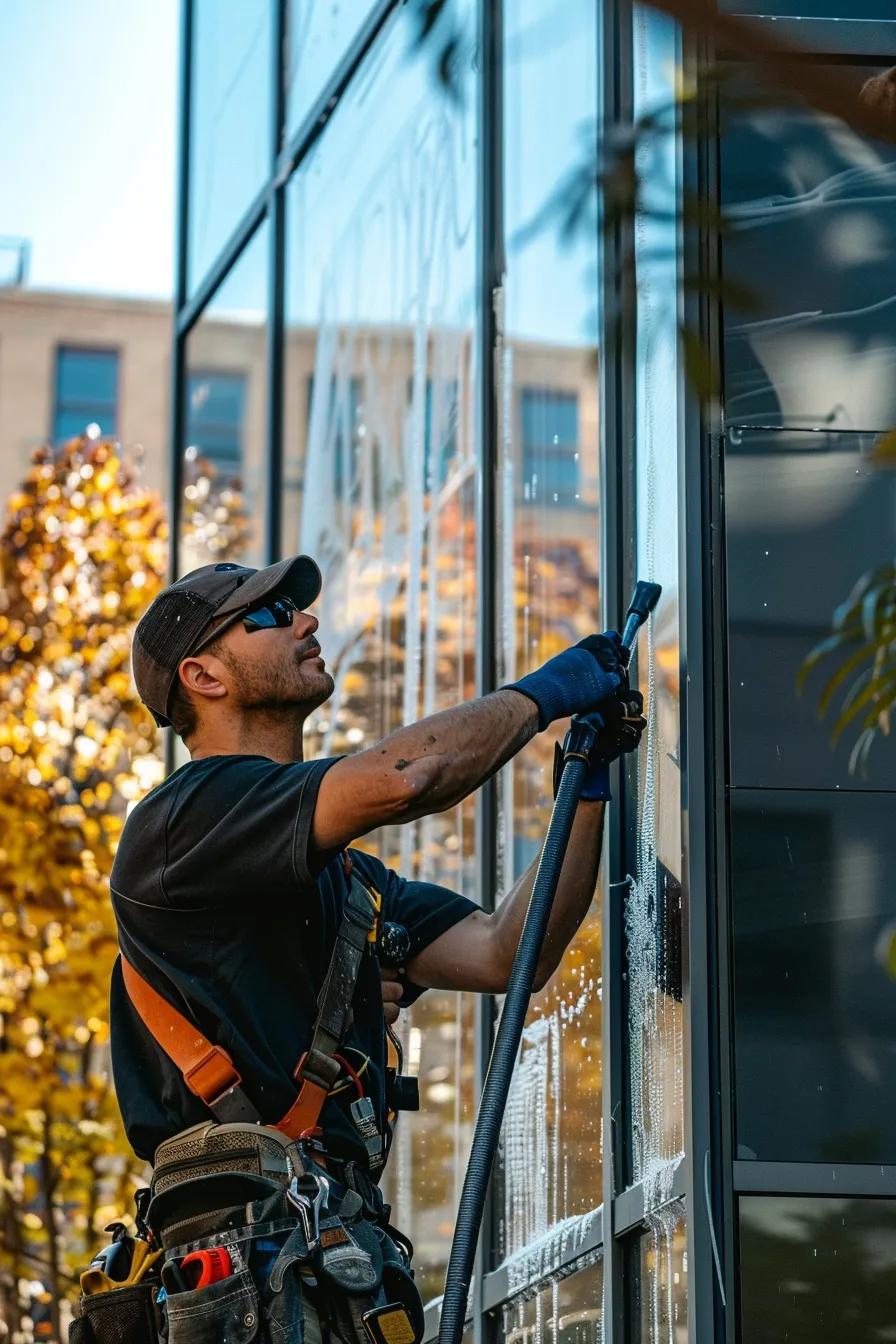
A professional commercial window cleaning job starts with an assessment to define scope, access needs, and safety requirements. Technicians inspect building height, glass condition, frames and sills, then choose the right method—purified-water systems, squeegee teams, or high-reach equipment. The work follows a consistent sequence: pre-rinse, cleaning (often with deionized or purified water), blade or squeegee drying, and a final inspection for streak-free results and intact seals. Quality control includes post-clean checks and re-clean options to honor a clear results commitment.
The numbered overview below helps property managers coordinate access and scheduling with building operations.
- Assessment and Quote: Review access, glass condition, and safety needs, then deliver a written scope.
- Preparation and Safety Setup: Set up fall protection and confirm insurance and permits when required.
- Cleaning with the Right Tools: Deploy purified-water systems, squeegees, or reach equipment to achieve streak-free glass.
- Quality Inspection and Touch-ups: Inspect panes, frames, and sills; perform any necessary touch-ups.
- Client Walkthrough and Sign-Off: Walk the site with the client, confirm satisfaction, and document completion.
This sequence ties each step to accountability and minimal disruption, making planning easier for facility managers and owners. Next, we explain why purified-water systems are often the preferred option.
Before booking a service, note that professional teams commonly use purified-water systems and follow strict safety and quality checks. Team Alpha Cleaning favors purified water for streak-free finishes and performs safety and quality inspections on every job. Request an on-site assessment and free quote to determine the best approach for your property.
How Purified-Water Systems Deliver Streak-Free, Eco-Friendly Results
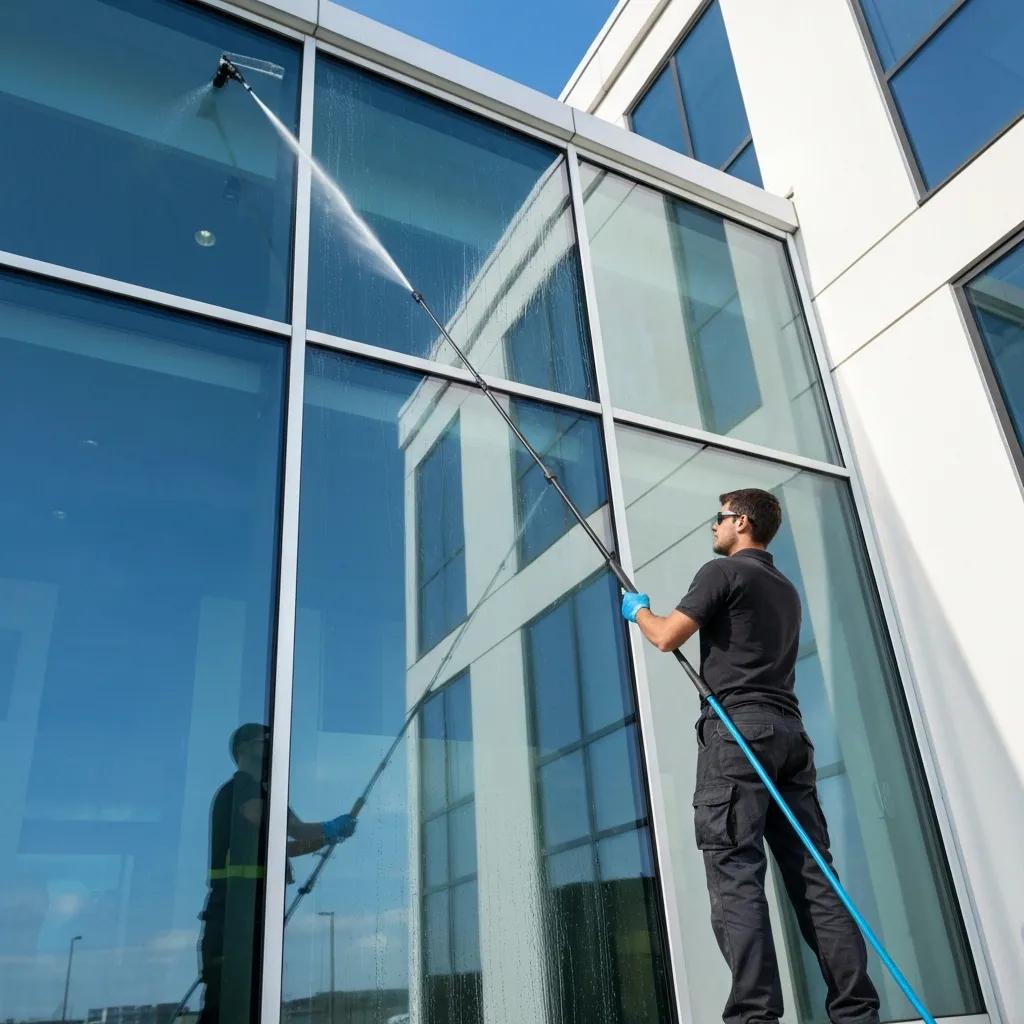
Purified-water systems—using deionized or reverse-osmosis water—remove dissolved minerals and impurities that cause streaking when water dries. Because purified water leaves no mineral residue, it dries clear without detergents, reducing chemical use and repeat cleanings. This method is eco-friendlier since it limits chemical runoff and can lower overall water use by extending the time between full cleans. For businesses that care about presentation and sustainability, purified-water cleaning balances performance with environmental responsibility.
These technical benefits explain why many modern providers favor purified-water cleaning for storefronts and office glazing where both appearance and sustainability matter.
Safety and Quality Control Measures Used During Cleaning
Commercial window cleaning safety and quality control include verifying crew insurance, using appropriate fall protection, and following standard procedures for high-access work. Teams perform pre-job risk assessments, secure the site to protect customers and staff, and conduct final inspections to confirm streak-free glass and clean frames and sills. Quality assurance often includes photographic records and a re-clean policy to fix any missed areas quickly. Building owners should confirm insurance and documented QA processes before work begins as part of good risk management.
These safeguards protect people, property, and business operations while delivering the visual and maintenance benefits outlined earlier.
Which Industries Benefit Most from Specialized Commercial Window Cleaning?
Different industries gain different, measurable benefits from commercial window cleaning—from retail gains in visibility to hygiene and compliance needs in medical settings. Retail storefronts depend on clear windows for visual merchandising; office buildings prioritize daylight and a professional look to support staff and client interactions. Hospitality and medical properties often require careful scheduling and documented cleaning standards to avoid disruption and meet hygiene expectations. High-rise buildings need specialized rigging, permits, and certified technicians for safe vertical access. Mapping these needs helps you choose a service plan that fits your industry.
- Retail: Clear displays and frequent cleaning aligned with promotions.
- Office: Focus on daylight, staff morale, and off-hour cleaning schedules.
- Medical: Infection-control awareness, strict scheduling, and documented safety steps.
- Hospitality: Presentation-driven cleaning timed around guest turnover and events.
This industry perspective guides scheduling choices and whether to use purified-water systems, squeegee teams, or high-access crews.
How Window Cleaning Is Tailored for Offices and Retail Storefronts
For offices and retail storefronts, frequency and timing are set to minimize disruptions while maximizing visual impact and occupant comfort. Offices often schedule interior and exterior work during evenings or weekends to avoid interrupting productivity. Retailers book cleanings around product launches and seasonal promotions so windows are clear during peak traffic. Service agreements can be structured as recurring weekly, monthly, or event-driven visits based on foot traffic and environmental exposure.
These scheduling approaches let businesses keep a polished look without interrupting daily operations, turning professional cleaning into a predictable expense rather than an ad-hoc scramble.
Unique Requirements for Medical Facilities and High-Rise Buildings
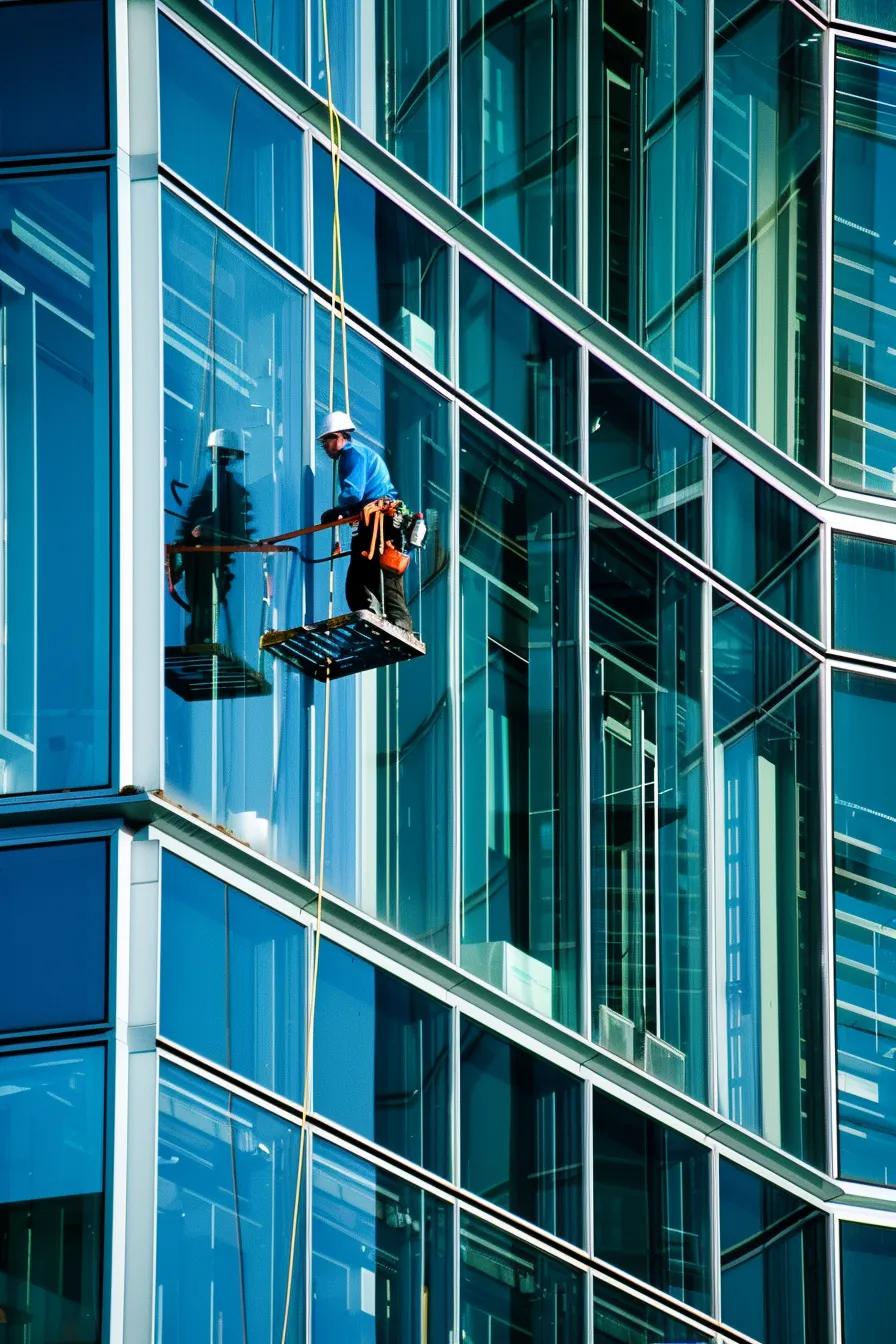
Medical facilities require strict infection-control procedures and careful coordination to avoid disrupting sensitive areas, so cleaners must follow documented safety protocols and schedules. High-rise work brings access challenges that call for certified rigging, specialized lifts or rope access, and compliance with permits and local regulations. Both environments require proof of insurance, trained crews, and a clearly defined scope to reduce liability and ensure thorough cleaning without operational interruptions. Choosing a provider experienced with these demands reduces risk and delivers consistent results.
Knowing these specialized needs lets you evaluate providers on demonstrated capability with medical hygiene standards and high-rise safety practices—not just price.
How Much Does Commercial Window Cleaning Cost and What Affects Pricing?
Commercial window cleaning cost depends on building size, height and access complexity, window condition, service frequency, and accessibility. Larger square footage and high-rise access increase costs due to labor, equipment, and safety needs; heavily soiled windows or mineral staining may require extra restoration and add to the price. Recurring contracts usually lower per-visit costs by spreading setup and mobilization across multiple visits, and bundling with other janitorial services can yield savings. Always ask for clear, written estimates so you know what’s included and avoid surprises.
Key pricing factors you should expect to discuss during quoting are listed below.
- Building Size and Number of Panes: Greater surface area increases materials and labor.
- Height and Access Complexity: High-rise work needs specialized equipment and certified crews.
- Window Condition: Neglected or stained windows may need restoration services.
- Frequency of Service: Regular schedules usually lower the per-visit cost.
- Scheduling Constraints: Off-hours or emergency calls can increase the price.
This breakdown explains why quotes vary and helps you frame the right questions when comparing providers.
The table below visualizes how different factors influence expected cost impact on commercial cleaning bids.
| Pricing Factor | How It Affects Price | Expected Impact |
|---|---|---|
| Building Height | Needs specialized equipment and certified personnel | Large |
| Window Condition | Restoration steps increase labor and materials | Medium to Large |
| Frequency of Service | Recurring work reduces mobilization costs | Medium |
| Accessibility | Obstructions or difficult access add setup time | Small to Medium |
Professional providers should supply a written estimate outlining scope, frequency, and any exclusions. For pricing clarity, request documentation that confirms insurance and potential additional charges. Team Alpha Cleaning provides transparent written estimates and free commercial quotes so you can compare options with confidence. If predictable budgeting matters, ask for a written scope and a free quote before committing.
What’s Included in a Free Commercial Window Cleaning Quote?
A free commercial window cleaning quote typically includes a written scope of work, itemized pricing by building zone or pane count, recommended frequency, and any access or safety needs identified during the assessment. Quotes should note exclusions—such as major restoration or replacement of sealed units—and confirm that crews are insured and permits will be handled as needed. Ask providers to specify their cleaning method (for example, purified-water systems versus squeegee teams), the expected timeline, and terms for re-clean or satisfaction guarantees. A detailed estimate helps you compare bids fairly and prevents surprise invoices.
Use these checklist items as pre-contract criteria to ensure expectations and responsibilities are clear before work starts.
How Scheduling Flexibility and Service Contracts Affect Pricing
Scheduling flexibility and service contracts can lower costs by allowing providers to optimize labor and routing. Regular visit commitments—monthly, quarterly, or seasonal—often come with discounted rates because crews can plan efficient routes and reduce setup time. Off-hour cleaning, emergency calls, or last-minute rescheduling may add premium charges for staffing and mobilization. Bundling window cleaning with other maintenance tasks can cut administrative overhead and produce additional savings.
Understanding these trade-offs helps you negotiate a service arrangement that balances cost savings with operational needs and timing preferences.
How to Maintain Your Business Windows Between Professional Cleanings
Routine maintenance between professional visits extends results and helps prevent hard-water staining and surface damage. Simple daily or weekly tasks—wiping frames and sills, removing fingerprints from high-touch areas, and rinsing obvious mineral buildup—keep glass presentable and lengthen the time between full cleans. Avoid abrasive pads or harsh chemical cleaners that can harm seals and frames; use soft microfiber cloths and mild solutions for spot cleaning. A short maintenance routine your staff can manage will protect the benefits of purified-water cleaning and reduce restorative work later.
Use the practical maintenance checklist below to train staff so windows stay presentable between professional visits.
- Daily: Wipe high-touch glass and entry doors with a soft cloth to remove fingerprints.
- Weekly: Clear debris from sills and tracks and rinse exterior ledges when it’s safe to do so.
- Monthly: Inspect for early signs of hard-water staining or seal failure and note issues for a professional check.
- After Events: Schedule targeted spot cleaning after promotions, construction, or severe weather.
Following this checklist reduces the need for frequent full cleans and helps you plan professional services more effectively.
Best Practices to Prevent Hard-Water Stains and Damage
To prevent hard-water stains and damage, rinse with purified or softened water when possible, address mineral buildup early, and avoid abrasive scrubbing that can etch glass. For exterior rinses, purified-water systems leave no mineral residue and cut the rate of stain formation. Indoors, avoid cleaners with acids or harsh salts that can degrade seals and corrode frames. If hard-water staining appears, call a professional to evaluate whether restoration or specialized demineralization is needed to prevent further harm.
These preventive steps and early interventions are usually more cost-effective than major restoration down the road.
How Often Should Commercial Windows Be Cleaned for Best Results?
Cleaning frequency depends on industry, location, and exposure. Retail storefronts in busy areas often need biweekly or monthly visits; office buildings typically benefit from monthly to quarterly schedules; medical and hospitality properties may require weekly or biweekly attention to meet cleanliness standards. Coastal or industrial locations with salt or heavy pollution will need more frequent service because of faster mineral buildup. Seasonal factors—pollen in spring or road salt in winter—also influence cadence and may justify targeted cleanings.
Picking the right frequency balances appearance goals, budget, and your tolerance for off-hours work. A professional assessment can recommend the optimal schedule for your site.
Why Team Alpha Cleaning Is a Trusted Choice for Commercial Window Cleaning in Camden and Atlantic Counties
Team Alpha Cleaning combines local responsiveness with practical assurances that matter to area businesses. Our crews are insured to reduce on-site liability, we stand behind our Clear Results Promise with a re-clean guarantee, and we deliver transparent pricing with written estimates so you know exactly what’s included. Where appropriate, we use purified-water systems for streak-free finishes, offer flexible scheduling to minimize disruption, and provide free commercial quotes so you can get an assessment before committing. These clear, local advantages make it easy for property managers to compare options and choose a provider focused on accountability and predictable outcomes.
How Insured Crews and Satisfaction Guarantees Protect Your Business
Insured crews shift financial risk for on-site accidents or property damage to the provider’s policy, reducing exposure for building owners. A satisfaction guarantee—like a documented re-clean policy—ensures work meets agreed standards and that missed areas are corrected at no extra cost. Ask providers for insurance certificates and written guarantee terms so you can confirm coverage and remediation timelines. Those safeguards create contractual clarity and protect ongoing operations during cleaning activities.
Checking these protections before work begins minimizes surprises and shows due diligence when selecting a vendor.
Why Transparent Pricing and Flexible Scheduling Matter for Local Businesses
Transparent pricing removes hidden fees and spells out services, frequencies, and exclusions so businesses can budget and compare bids accurately. Flexible scheduling lets work happen during off-hours or low-traffic times to preserve productivity and guest experience while still getting necessary maintenance done. Together, clear written estimates and flexible timing reduce operational disruption and unexpected expenses—especially important for small and mid-sized businesses with tight margins. When evaluating providers, request a written scope and available scheduling options as part of your free commercial quote.
For a no-obligation assessment and a clear, written estimate tailored to your property, contact Team Alpha Cleaning to request a free commercial quote and learn more about our insured crews, flexible scheduling, and Clear Results Promise.
Frequently Asked Questions
What are the environmental benefits of using purified-water systems for window cleaning?
Purified-water systems reduce or eliminate the need for harsh chemicals, cutting chemical runoff and protecting surrounding landscaping and stormwater systems. Because purified water dries without mineral residue, it reduces how often you need full cleanings—conserving water and lowering the overall environmental footprint. Choosing purified-water methods gives you clear windows while supporting greener operations.
How can businesses keep windows clean during seasonal changes?
Plan a proactive maintenance schedule that accounts for seasonal factors—pollen in spring, road salt in winter, or windblown dust in summer. Regular inspections and spot cleaning prevent buildup from becoming permanent. Schedule professional cleanings before and after peak seasons and train staff to handle basic upkeep like wiping fingerprints and clearing sills to keep windows inviting year-round.
What should businesses look for when choosing a commercial window cleaning service?
Look for experience with your property type, proof of insurance, and clear quality-control policies such as re-clean guarantees. Ask for transparent, written estimates that list what’s included and excluded. Verify the provider’s cleaning methods (purified water vs. squeegee teams), safety procedures for high-access work, and scheduling flexibility so you can minimize disruption to operations.
How should businesses prepare for a professional window cleaning visit?
Tell the cleaning team about specific access needs or safety concerns and clear the area around windows of obstructions like furniture or signage. Notify staff of the scheduled work to minimize interruptions. A quick pre-clean inspection to identify hard-water stains or damaged seals helps the crew plan any needed restoration, ensuring a smooth, efficient service.
What risks come from neglecting regular window cleaning?
Skipping regular cleaning can let dirt and mineral deposits build up, which may permanently etch glass and damage frames or seals—leading to costly repairs. Dirty windows can also harm customer perception, reduce foot traffic for retailers, and block natural light that supports employee well-being and productivity. Regular cleaning preserves window integrity and helps maintain a positive business image.
How does cleaning frequency differ by industry?
Frequency varies by sector: retail storefronts often need biweekly or monthly service to keep displays sharp, offices usually schedule monthly to quarterly cleanings, medical facilities may require weekly or biweekly attention for hygiene standards, and hospitality venues often align cleanings with guest turnover. Local conditions—coastal salt, pollution, or seasonal pollen—also affect cadence. A provider can recommend the right schedule for your situation.
Conclusion
Professional commercial window cleaning improves clarity, increases natural light, and boosts curb appeal—benefits that enhance client perception, support employee productivity, and reduce long-term maintenance costs. By committing to a regular cleaning plan and choosing the right methods, you protect your investment and present a polished, professional image. Contact Team Alpha Cleaning today for a free quote and learn how our local teams can help transform your business environment.