High‑Rise Window Washing for Your Business — Professional, Safe, and Efficient Commercial Cleaning

High‑rise window washing specializes in cleaning exterior—and reachable interior—glass on multi‑story commercial buildings using rope access, suspended platforms, and purified water systems for streak‑free results. This guide explains why professional high‑rise window washing matters for a property’s appearance, occupant safety, and energy performance. You’ll find clear explanations of common cleaning methods, applicable safety standards, the factors that shape pricing, and how to request a free, no‑obligation quote. Team Alpha Cleaning serves Camden and Atlantic Counties, NJ, with licensed, insured crews, purified water systems, and flexible scheduling. Building owners, facilities managers, and property managers will get practical criteria for choosing methods (rope access vs. suspended scaffold), an overview of OSHA obligations, and realistic cost drivers. The article is organized into practical sections: benefits and value, our cleaning process and equipment, safety and compliance basics, transparent pricing and how to get a quote, local coverage, and a focused FAQ for common commercial questions.
Why hire professional high‑rise window washers for your building?
Professional high‑rise cleaning removes airborne pollutants and mineral buildup while protecting glass and surrounding facade materials from permanent etching. We combine chemical and mechanical cleaning—purified water to lift salts and particulates plus rope or scaffold access to reach every panel safely. Clean windows let in more natural light, improving occupant comfort and often reducing artificial lighting needs. A licensed team also lowers liability by replacing unsafe, improvised access methods and by documenting safety compliance for property owners. These practical benefits support long‑term asset preservation, tenant satisfaction, and better operational performance.
Regular high‑rise cleaning produces measurable value through improved daylighting and lower maintenance costs; the next section explains how appearance and valuation benefit from scheduled cleaning.
How does regular high‑rise window care improve appearance and property value?
Routine professional cleaning restores optical clarity and removes visible staining that hurts curb appeal and brand presentation. Well‑maintained façades attract better tenants and strengthen leasing conversations because prospective occupants see a property that’s cared for. Regular removal of corrosive deposits prevents pitting and seal failure that accelerate glass and frame replacement. Industry examples show buildings with documented maintenance plans keep tenants satisfied and avoid costly emergency replacements. Those appearance and valuation gains also tie directly to choices about cleaning frequency and methods.
What energy and safety gains come from routine high‑rise maintenance?
Regular maintenance improves daylighting by increasing visible light transmission, which can reduce artificial lighting needs when paired with good controls. Cleaner glass often translates into lower lighting hours or intensity in many office settings. From a safety standpoint, routine cleaning helps catch glazing seal deterioration and framing issues early, reducing the risk of glass failure, falling glass, or interior water intrusion. These early interventions lower emergency repair risk and keep occupants safer—important trade‑offs to weigh when selecting service frequency and methods.
| Benefit | Outcome | Value |
|---|---|---|
| Improved curb appeal | Clear, streak‑free glass that looks cared for | More tenant interest and stronger market positioning |
| Extended glass lifespan | Removal of corrosive deposits prevents etching | Lower replacement and repair costs over time |
| Increased natural light | Higher visible transmittance; less reliance on artificial light | Potential energy savings and lower operating costs |
The table above shows how core benefits translate into measurable outcomes for commercial property owners and managers. Next, we outline our operational process and equipment choices that deliver those results.
What does our advanced high‑rise window washing process look like?

Our process starts with a structured site assessment to define access strategy, safety planning, and the best cleaning method—rope access, suspended scaffold, or water‑fed pole—based on facade geometry and anchor availability. That assessment determines how we’ll work and the benefits you can expect: efficient coverage with certified safety controls and streak‑free results from purified water systems. After planning, crews mobilize equipment, inspect anchors and PPE, and carry out cleaning with on‑site supervision and quality checks. Each job ends with written documentation of work performed and recommended follow‑up to keep performance consistent. Knowing the equipment and training behind each method explains why choices affect cost and scheduling.
Which specialized tools do we use for safe, effective high‑rise cleaning?
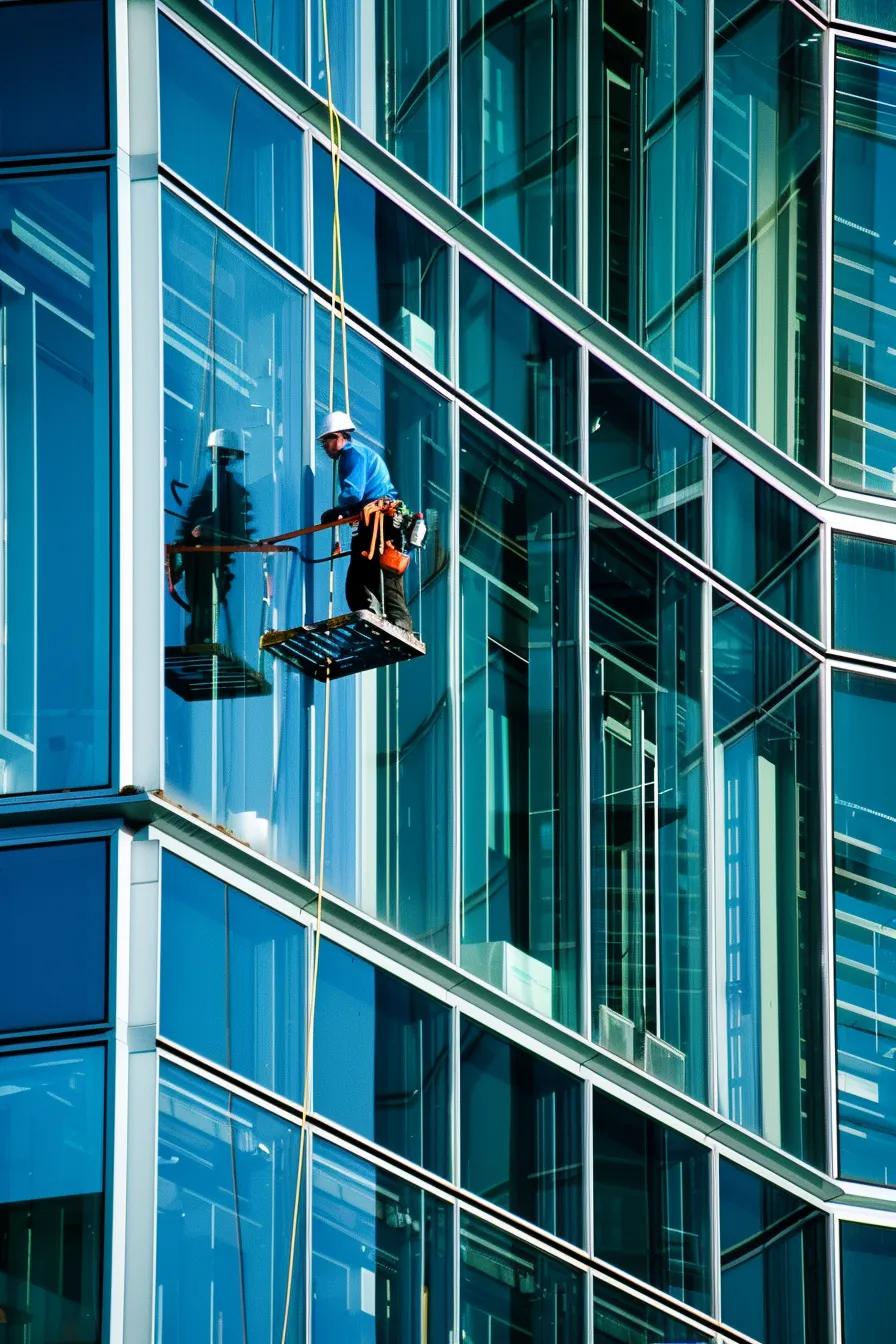
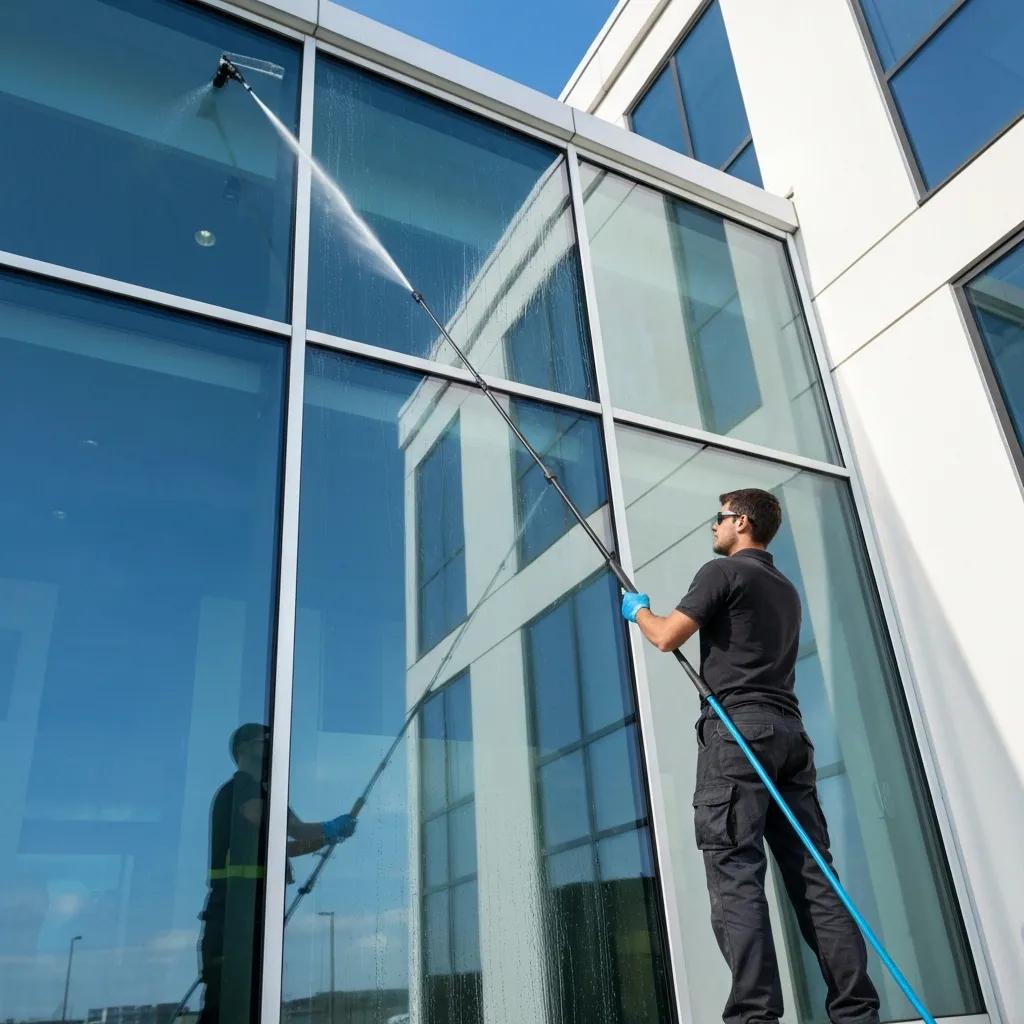
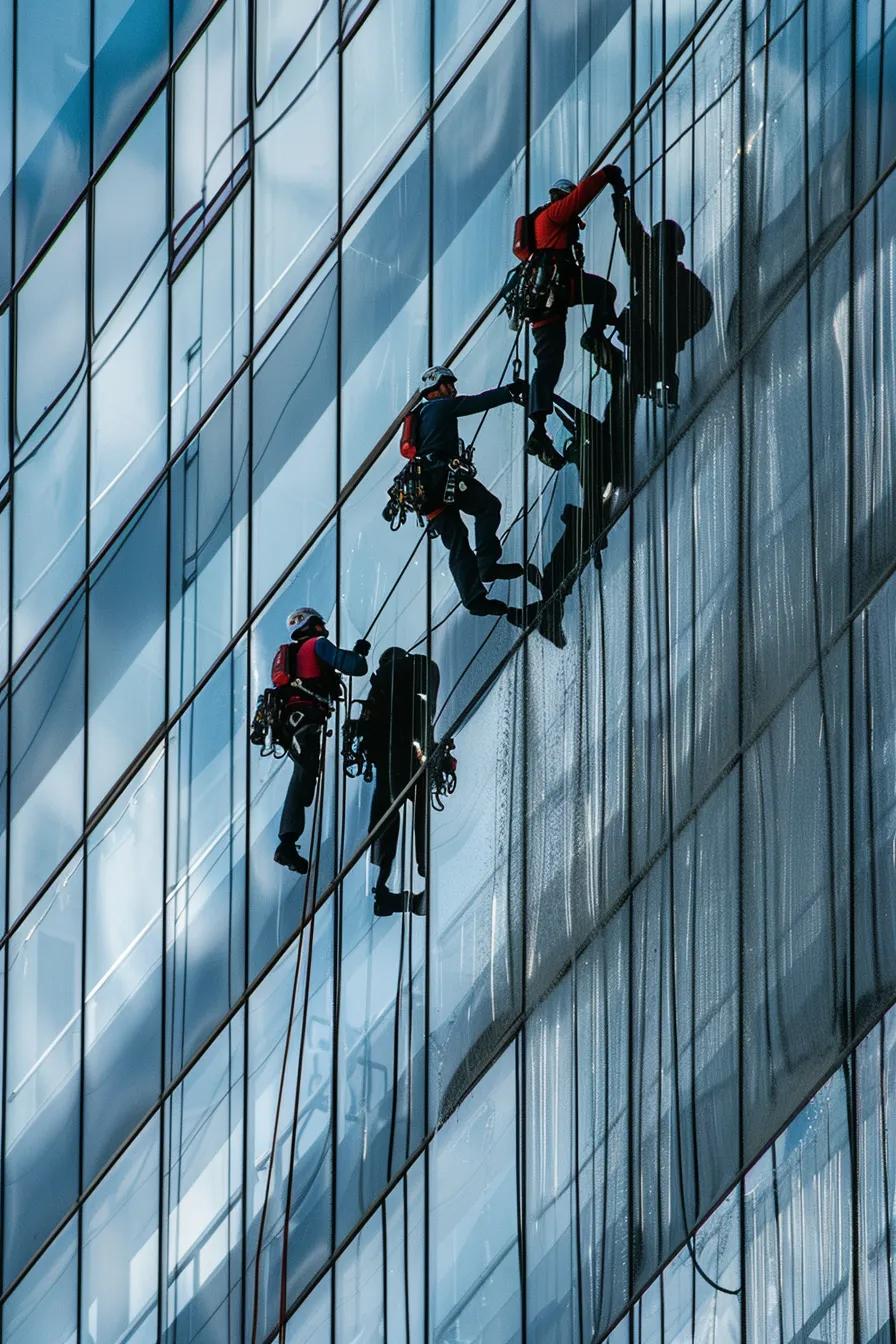
We rely on three primary systems: rope descent for narrow or complex facades, suspended scaffolds for large continuous surfaces, and purified water‑fed poles where ground access reaches the glazing. Rope descent gives precise positioning with a small footprint; suspended scaffolds provide a stable platform for big glass expanses and material handling; purified water systems remove dissolved solids that cause spotting, producing streak‑free results without chemical residue. Routine inspections of fall‑arrest gear, scaffold components, and filtration units are standard parts of every job to preserve performance and safety.
How are our technicians trained and certified?
Our technicians complete structured training in rope access, scaffold operation, fall protection, and purified water equipment, with regular drills for emergency procedures and rescue. Training covers practical tasks—anchor setup and testing, water system operation—alongside safety outcomes so crews perform reliably while minimizing risk. Certifications follow industry programs and internal competency checks; teams conduct periodic equipment inspections and mock rescues to keep skills current. On‑site supervision and clear qualification records give building owners confidence that each job follows a documented safety plan.
| Method | Best for | Notes |
|---|---|---|
| Rope access | Narrow facades and targeted panel work | Small ground footprint; precise positioning |
| Suspended scaffold | Large continuous façades and heavy material handling | Stable platform for extended projects |
| Water‑fed pole (purified) | Lower high‑rise reach from the ground | Streak‑free glass without suspended access |
That comparison helps owners weigh trade‑offs between access type, cost, and result. The next section explains how we manage safety and compliance.
How do we maintain safety and regulatory compliance?

We follow OSHA standards, perform certified anchor inspections, maintain written rescue plans, and carry insurance that protects workers and property owners. Safety is procedural: checklists, inspection cycles, and documented training reduce fall hazards and keep anchorages, lifelines, and fall arrest systems dependable. We provide building owners access to procedures, training records, and inspection logs so responsibilities are clear and liability is reduced. These practices also let crews respond to weather or facade changes without compromising safety or service continuity.
Which OSHA rules and safety protocols guide our work?
OSHA guidance for elevated work covers fall protection, anchor standards, and employer responsibilities that apply directly to high‑rise window washing and its access systems. Key points include fall arrest criteria, competent‑person inspections, and the need to keep records of inspections and worker training. Building owners and contractors often share duties around certified anchors and periodic evaluation; clear assignment of those responsibilities reduces regulatory risk. Regular anchor checks and maintenance schedules keep equipment compliant and ready for work, and they form the basis of effective rescue planning.
This section outlines the core safety regulations and protocols that govern high‑rise window cleaning.
Occupational Safety and Health in High‑Rise Window Cleaning
Occupational Safety and Health (OHS) is a key part of modern workplace practice, especially for high‑rise cleaning. Effective OHS implementation reduces accident rates and supports productivity. This study examines how OHS management—and VR/AR‑based training tools—can lower fall‑from‑height incidents and improve worker performance.
The Influence of Occupational Safety, Health, And Security Standards On Increasing The Productivity of High‑Rise Building Glass Cleaning Workers, EP Mahadewi, 2025
How do anchor certification, insurance, and rescue plans protect your property and our team?
Certified anchor points give secure connections for rope systems and scaffolds; scheduled inspections and recertification verify structural integrity and reduce the chance of anchor failure. Insurance—general liability and workers’ compensation—provides financial protection for both the property owner and the contractor in the rare event of damage or injury. Written rescue plans and practiced drills ensure quick, effective retrieval if a technician is incapacitated. Together, these layers of protection—certified anchorages, insurance, and rehearsed rescue plans—address prevention and response, which is why owners should request documentation before authorizing work.
- Certified anchorages lower structural failure risk through engineered design and inspections.
- Insurance shifts financial exposure away from owners for covered incidents.
- Rescue plans ensure trained, practiced responses to on‑site emergencies.
| Safety element | Requirement | Typical practice |
|---|---|---|
| Anchor certification | Periodic structural evaluation | Documented inspections and recertification schedules |
| Insurance | Liability and workers’ coverage | Proof of insurance provided before mobilization |
| Rescue plan | Written emergency procedures | Regular drills and readiness checks on site |
This safety overview shows how distinct elements combine to protect people and property. Next, we cover pricing transparency and how to request a free estimate.
What affects pricing, and how do you get a free quote?
Transparent pricing depends on building height, window count and size, site accessibility, service frequency, and any special conditions like fragile façade materials or limited access hours. Operationally, greater height raises equipment complexity and time on task; access challenges require custom rigging or scaffold setups that add labor and mobilization costs. Mid‑Atlantic market ranges vary by these drivers, but estimates also reflect permit or traffic control costs when needed and frequency discounts for recurring contracts. Below we list common pricing drivers and explain how to request a no‑obligation quote from a local provider.
Which factors most influence the cost of high‑rise window washing?
Primary cost drivers include the building height tier, total panes or square footage of glass, façade access complexity, and required safety or permitting measures. Height generally determines the equipment bracket—water‑fed pole, rope access, or suspended scaffold—with corresponding labor and equipment rates that rise with height. Access constraints like narrow sidewalks or traffic control needs can add planning time and permit fees. Frequency matters too: recurring contracts reduce per‑visit mobilization costs. Environmental exposure—coastal salt or heavy pollution—may also increase cleaning time and frequency, changing the long‑term maintenance budget.
- Building height: Greater height needs more specialized equipment and time
- Window count/size: Larger areas increase labor and consumables
- Accessibility: Complex sites add planning and mobilization
- Frequency: Recurring plans lower per‑visit costs
| Pricing driver | Attribute | Impact on cost |
|---|---|---|
| Building height | Equipment complexity and safety requirements | Higher = increased equipment and labor costs |
| Window area | Total panes or square footage | Larger area increases time and consumables |
| Accessibility | Site logistics (permits, traffic control) | Additional planning and fees may apply |
| Frequency | Single vs. recurring service | Recurring contracts typically lower per‑visit rates |
The table clarifies how project attributes affect price. The next section gives a simple process to request a free, no‑obligation quote.
How do you request a free, no‑obligation quote for your building?
Requesting a free quote is easy—follow these three steps:
- Gather basic building details: address, estimated height, photos, and preferred scheduling windows.
- Ask for an assessment: request an on‑site or virtual evaluation to determine access method and scope.
- Receive a written estimate: review scope, recommended equipment, suggested frequency, and clear pricing.
These steps produce a clear, comparable estimate without obligation. Team Alpha Cleaning provides free quotes and assessments for businesses in Camden and Atlantic Counties to help you plan maintenance confidently.
Which areas do we serve with high‑rise window washing?
We focus on Camden County and Atlantic County, NJ, where a local presence means faster dispatch, flexible scheduling, and practical knowledge of regional weather patterns that affect cleaning frequency and methods. Being local reduces travel time, lets crews respond quickly after storms or events, and simplifies coordination with facility managers for off‑hour access. Familiarity with local permitting and site constraints speeds logistics for multi‑day scaffold or rigging setups. Working with a nearby provider also makes it easier to verify safety documentation and keep maintenance schedules consistent, reducing unexpected delays.
Why choose a Camden and Atlantic County‑based team for your commercial cleaning?
Local crews deliver practical advantages: quicker emergency response, hands‑on knowledge of regional conditions (for example, coastal salt spray in Atlantic County), and smoother permit interactions with municipal authorities. We can arrange off‑hour cleanings to minimize tenant disruption and coordinate on short notice for events or storm recovery. Proximity also supports regular inspections and recurring maintenance that preserve glass condition and reduce long‑term costs. Local references are easier to check, giving owners added confidence in consistent service and code compliance.
How does our local presence help your maintenance schedule?
Local teams offer flexible scheduling—evenings or weekends—to limit tenant disruption and keep building operations running. Recurring maintenance plans are coordinated with facility managers to match occupancy and event calendars, improving predictability and budgeting. When weather or other events force changes, a nearby crew can reschedule quickly and handle emergency cleanups with less lead time. That responsiveness reduces downtime, supports tenant satisfaction, and keeps cleaning cycles aligned with your overall maintenance strategy.
- Flexible scheduling minimizes tenant disruption and supports business continuity.
- Recurring plans provide predictable budgets and consistent results.
- Local crews enable quick rescheduling for weather or event‑related needs.
Those scheduling advantages connect to common owner questions, which we answer in the FAQ below.
Common questions about high‑rise window washing
Our FAQ answers practical questions about scheduling, scope, safety, and building types so facility managers and owners can decide quickly. Each answer is concise and focused on what matters for procurement and operations: recommended frequency, interior vs. exterior scope, safety measures to expect, and the commercial building types we serve. Use these answers to prepare for vendor conversations and clarify responsibilities before work begins.
How often should high‑rise windows be cleaned?
For many commercial high‑rises, twice‑yearly cleaning balances cost and preservation. Exposure factors—coastal salt, heavy pollution, or nearby construction—can raise that to quarterly or more. New construction typically needs more frequent cleanings in the first year to remove construction film and airborne residue. A scheduled maintenance plan reduces long‑term replacement costs and helps owners budget reliably.
Do you clean interior as well as exterior windows on high‑rises?
Exterior cleaning is the standard high‑rise scope because it addresses the deposits that affect façade performance and appearance. Interior cleaning is available but usually requires tenant coordination and access permissions. When interior work is requested, we coordinate with facility managers for off‑hour scheduling and secure any needed approvals. Some interior tasks may need additional insurance or permits depending on building rules; all scope details appear in the written estimate to avoid surprises.
What safety measures are in place during high‑rise cleaning?
We use certified anchor points, fall‑arrest systems, daily equipment checks, PPE for every technician, documented rescue plans, and proof of insurance before mobilization. Anchor inspections, harness checks, and scaffold inspections follow scheduled procedures; crews also hold pre‑job briefings and daily hazard assessments. Rescue plans are site‑specific and drilled regularly so response is fast and practiced. These layered controls protect workers and property—and they form the documentation building owners should request before work starts.
What types of commercial buildings do you service?
We service office towers, hotels, multifamily residential towers, hospitals, and mixed‑use buildings where exterior glazing and façade maintenance matter to operations and occupant comfort. Sensitive facilities—medical centers or hospitality venues—often need off‑hour scheduling, extra coordination, or additional protocols, which we address in the service plan. Some projects also require permits for streetscape impacts or traffic control, especially when using suspended scaffolds or cranes. Building type guides method selection and scheduling during the initial evaluation.
- Office towers, hotels, multifamily high‑rises, hospitals, and retail high‑rises are typical clients.
- Sensitive facilities require tailored schedules and close coordination with operations.
- Permit needs and logistics are assessed during the site evaluation.
These answers prepare owners to request tailored estimates and align expectations with service needs. When you’re ready, a local provider can complete the assessment steps above.
Team Alpha Cleaning offers free, no‑obligation quotes and on‑site assessments for businesses in Camden and Atlantic Counties, NJ. Our insured crews, licensed professionals, purified water systems for streak‑free results, and transparent written estimates help you manage facilities responsibly. Request an assessment with your building address, approximate height, and photos to speed the evaluation. Our local presence supports flexible scheduling and faster response for urgent needs, helping you protect appearance, safety, and value with professional high‑rise window washing.
Frequently Asked Questions
What are the environmental benefits of high‑rise window washing?
Regular high‑rise cleaning supports environmental goals by improving daylighting and reducing the need for artificial lighting, which can lower energy use. It also removes pollutants and corrosive deposits that shorten the life of glass and façade materials, conserving resources over time. Cleaner windows help maintain a healthier indoor environment by reducing dust and allergen buildup on glazing surfaces.
How do weather conditions affect window washing schedules?
Weather is a major scheduling factor. Rain, strong winds, or extreme temperatures can create safety risks and lead to rescheduling. Wet surfaces and high winds affect equipment stability, and coastal salt or heavy pollution can require more frequent cleanings. A local provider will evaluate weather impacts and adjust schedules to protect safety and deliver the best results.
What should building owners know about insurance for window washing?
Owners should confirm a vendor carries adequate insurance—general liability and workers’ compensation—before work begins. Proof of coverage protects both property and workers in case of accidents or damage. Request certificates of insurance and verify coverage limits meet local or contract requirements to mitigate financial risk.
Are there specific regulations for high‑rise window washing in New Jersey?
Yes. High‑rise window washing must follow OSHA standards for fall protection, anchor inspections, and worker training. Local municipalities may add permit or operational requirements. Owners should confirm their provider complies with OSHA and local codes and maintains up‑to‑date training and documentation.
What are the advantages of purified water systems?
Purified water removes dissolved minerals and contaminants that cause spotting and streaks, often eliminating the need for chemical cleaners. The result is a cleaner finish with less scrubbing and longer intervals between treatments. Purified water systems are both effective and environmentally friendlier for glass maintenance.
How can building managers keep tenants safe during cleaning?
Managers should coordinate schedules to minimize disruption and notify tenants in advance. Verify the cleaning service uses certified anchorages and fall protection and provides proof of insurance. Clear communication about access changes and an established emergency response plan add peace of mind and help ensure tenant safety throughout the work.
Conclusion
Professional high‑rise window washing improves a building’s look, supports energy efficiency, and protects long‑term value. Choosing a local provider like Team Alpha Cleaning gives you safety compliance, transparent estimates, and maintenance plans tailored to your property. Ready to start? Request a free, no‑obligation quote today and see how expert care keeps your commercial space looking and performing its best.