Expert Tips for Choosing Residential High-Rise Window Cleaners: Safety, Cost, and Quality Guidance

Hiring the right team for residential high-rise window cleaning means knowing what safety protections, pricing factors, and cleaning methods matter. This guide defines what “residential high‑rise” work includes, explains why clear safety practices and detailed quotes protect you, and gives a simple checklist to evaluate contractors for multi‑story homes and condos. You’ll learn which certifications and insurance documents to request, how purified‑water systems and rope‑access techniques change results, what drives cost, and the exact questions to ask before you book. We also include comparison tables and practical lists to use when vetting companies, plus a short, factual example showing how a local provider handles these topics. Use these steps to shortlist contractors, confirm protections, and request a free, itemized quote so your expectations for safety and quality are clear.
What Safety Standards Should You Look for in High-Rise Window Cleaners?

Residential high‑rise window cleaning is a safety‑critical service that should be handled by trained, insured teams with documented on‑site procedures. Key protections include public liability insurance and workers’ compensation, formal rope‑access or height‑safety training, and regular equipment inspection records. These elements limit homeowner exposure and make sure the crew can respond professionally if something goes wrong. When you contact providers, ask for certificates, policy numbers, and recent reference jobs so you can confirm coverage and experience before any work starts. The short checklist below helps you verify that a contractor’s paperwork matches their field practices.
Use a focused verification list during initial conversations so claims are backed by documents and recent job examples. Request images of certificates, insurer contact names, and a walkthrough of the crew’s on‑site steps — that will reveal whether procedures are consistent or improvised. Confirming these items leads directly to which certifications and insurance types to request.
Which Certifications and Insurance Are Essential for Residential High-Rise Window Cleaning?
Public liability insurance covers property damage or third‑party injuries that might occur during cleaning; workers’ compensation covers crew injuries so homeowner liability is limited. Reputable providers will supply a certificate of insurance showing coverage limits and the insurer’s details — ask for that paperwork and the issuing company’s contact information to validate it. Recognized rope‑access or height‑safety training (often described as IRATA‑style or equivalent) shows the team knows rescue and rope procedures; request training certificates and recent refresher dates to confirm ongoing competence. Verifying documents and checking policy currency with the insurer reduces the chance of coverage gaps and leads naturally into how those protections are used on the job.
Field practices must mirror paper claims for safety to matter — the next section walks through the verification steps that confirm that match.
Before the table below: this table clarifies what common certifications and insurance types cover and why each matters when you assess residential high‑rise window cleaners.
| Certification / Insurance | What It Covers | Why It Matters to Homeowners |
|---|---|---|
| Public Liability Insurance | Property damage and third‑party injury claims | Protects you financially if equipment or actions cause damage |
| Workers’ Compensation | Medical and wage benefits for injured workers | Keeps homeowner liability from falling onto you if a worker is hurt |
| Rope-access / Height Safety Training (IRATA-style) | Competence in rope systems, rescue, and safety procedures | Shows the crew is trained to work safely at height |
| Equipment Inspection Records | Regular maintenance and testing of harnesses, ropes, and platforms | Confirms tools are maintained and less likely to fail during work |
Review these documents with any contractor before scheduling high‑rise work. Next we cover the on‑site safety steps crews use to put those protections in place.
How Do Professional Cleaners Ensure Safety During High-Rise Window Washing?
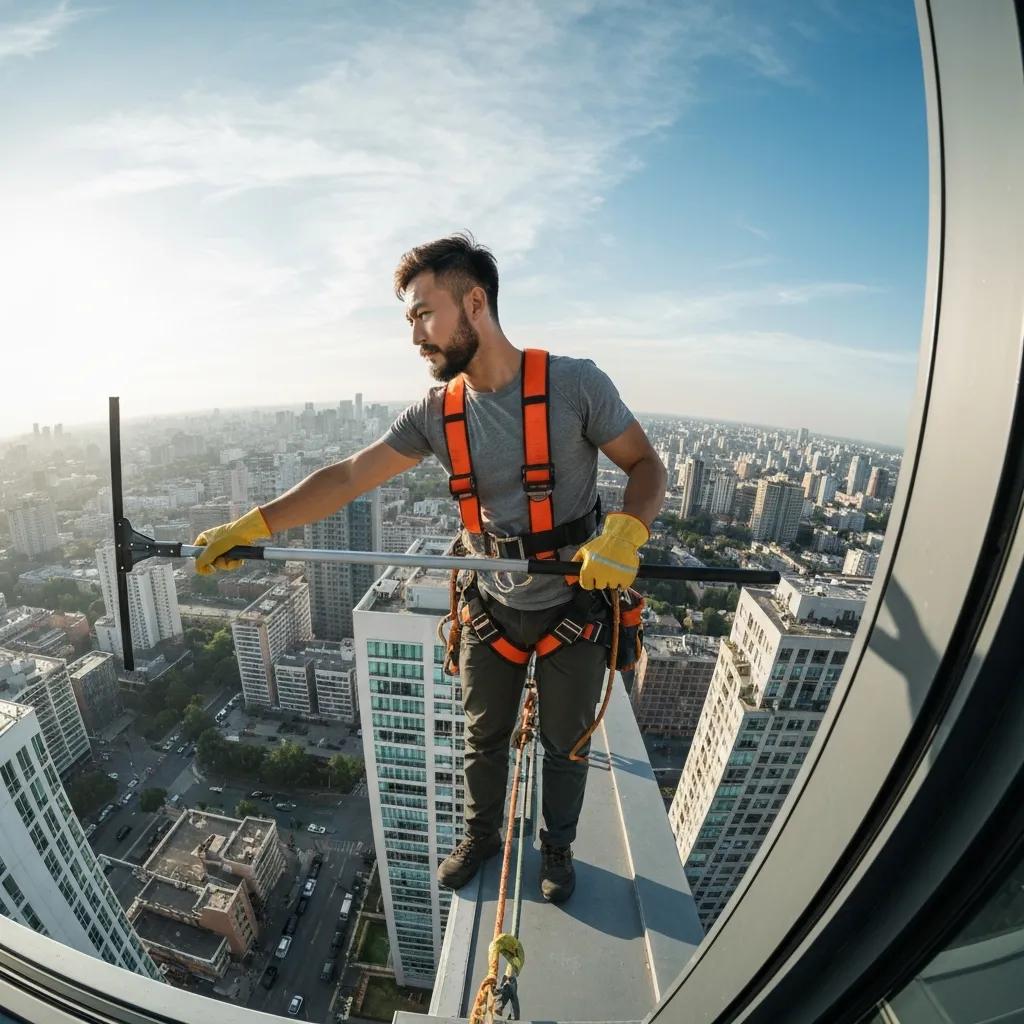
Pro crews combine personal protective equipment, clear procedures, and site‑specific risk assessments to keep operations safe. Typical measures include anchor and harness inspections, two‑person rope systems or backup lines, pre‑job equipment checks, and a written fall‑protection plan tailored to the building façade and access points. Crews should also run brief on‑site safety talks covering pedestrian exclusion zones, weather checks, and communication protocols so residents know what to expect and when work might pause. Asking about these operational steps helps you confirm that certificates reflect consistent field behavior and sets you up to compare cleaning methods in the next section.
Once safety paperwork and on‑site practices are confirmed, the next important question is how to judge cleaning quality and which methods produce streak‑free results.
How Can You Evaluate the Quality and Methods of High-Rise Window Cleaning Services?
Quality is easiest to evaluate by checking the methods used, reviewing before/after photos or videos, and speaking with references from similar residential projects. Ask for visual examples of past jobs, contactable references in comparable buildings, and specifics about the cleaning methods they used — some techniques handle hard water or delicate frames better than others. Look for providers who clearly explain their equipment and approach, whether that’s water‑fed poles for lower levels, rope access for exposed façades, or purified water systems for spot‑free finishes. Clear, specific descriptions are a good sign of professional standards. The next subsection explains the benefits of purified water systems and pro tools so you can compare claims with real outcomes.
Reviewing tools and testimonials gives you a focused, technical view of what produces consistently good results on multi‑story residences.
What Are the Benefits of Using Purified Water Systems and Professional Tools?

Purified water removes minerals and dissolved solids so glass dries without spotting or chemical residues — especially useful where tap water is hard. Used with water‑fed poles and professional squeegees, purified water reduces detergent use, speeds drying, and yields clearer results on windows, framed doors, and balcony glazing. For upper‑story exteriors where rinsing and squeegeeing is limited, these systems let crews rinse and dry remotely, cutting repeat visits and streaks. Understanding how this equipment works helps you weigh “streak‑free” guarantees against the actual tools and procedures a provider uses.
Knowing the role of purified water and pro tools naturally leads to checking a contractor’s experience and reputation for delivering those outcomes consistently.
Before the comparison table: the table below contrasts common cleaning approaches so you can see which methods fit different residential high‑rise scenarios.
| Method / Tool | Benefit | Outcome / When to Use |
|---|---|---|
| Purified Water System | Spot‑free drying without detergents | Best where hard water or delicate glass make residue a concern |
| Water-Fed Poles | Reach lower to mid elevations safely without ropes | Ideal for balconies and mid‑rise façades with safe, stable access |
| Rope Access (Harness/Rope) | Direct access to exposed upper façades with precision | Needed for high‑rise exteriors and tricky access points |
| Professional Squeegees & Cleaning Tools | Controlled drying and edge finishing | Used for final detail work to remove remaining water and ensure streak‑free edges |
Choose a provider whose toolkit fits your building’s access and glass conditions. Next we explain why experience and local reputation matter for consistent quality.
Why Is Experience and Reputation Important When Choosing a High-Rise Window Cleaner?
Experience shows a provider has worked on different building types, handled access challenges, and adjusted for local conditions like coastal salt or urban pollution. Ask for before/after photos of comparable jobs and talk to nearby property managers or condo boards to confirm consistent results and reliable scheduling. Local reputation matters for homeowners in Camden County and Atlantic County because regional water quality and weather affect method choice and frequency — a local team knows those variables. Confirming this background prepares you to compare price drivers and the written details a quote should include.
Knowing a contractor’s track record leads directly into the next key area: what drives cost and how to get clear estimates.
What Factors Influence the Cost of Residential High-Rise Window Cleaning?
Price is driven by measurable items: window count and size, height and accessibility, service frequency, and special treatments like hard‑water stain removal or screen removal. Labor goes up with awkward access, balconies, fixed screens, and the need for rope access or scaffold setup — these costs should appear as line items in a transparent quote. Extra charges can include mobilization fees, mineral‑deposit treatments, and weekend or off‑hours premiums; ask for a written breakdown so each factor is clear. The table below maps common pricing drivers and how they affect an estimate, followed by guidance on what information contractors need for accurate pricing.
A clear quote checklist helps you avoid surprises and compare bids on an apples‑to‑apples basis.
Before the price‑driver table: this table shows typical attributes and their pricing impact so homeowners know what to document for quotes.
| Pricing Factor | How It Impacts Price | What Homeowners Should Provide |
|---|---|---|
| Window Count & Size | More glass increases labor and time | Provide a room‑by‑room count or photos to estimate scope |
| Accessibility & Height | Requires rope access or special equipment, raising costs | Note balconies, fixed screens, recessed frames, or obstructions |
| Special Treatments | Hard‑water removal or film treatment needs extra time | Point out visible staining or previous damage |
| Frequency & Service Plan | Regular contracts usually reduce per‑visit cost | Specify desired cadence (quarterly, biannual, annual) |
This table helps you prepare accurate RFPs and understand why quotes differ. Next we cover what a written quote should include to protect you.
How Do Window Size, Count, and Accessibility Affect Pricing?
Window size and count set the baseline: larger panes and more units increase labor and drying, pushing some providers from per‑window to hourly or per‑project pricing. Accessibility — fixed screens, recessed frames, balconies, or limited access — can mean extra setup, special equipment, or more experienced rope crews, all of which raise the estimate. When asking for a quote, provide clear photos, measurements when possible, and notes about hard‑to‑reach areas so contractors can give accurate line‑item estimates instead of guesses. That preparation reduces surprises and makes bid comparison straightforward.
Next, see what a detailed quote should include to protect homeowners from hidden fees.
Why Is Getting a Detailed Quote Important Before Hiring?
A detailed written quote should list scope, exclusions, mobilization or equipment fees, insurance confirmation, scheduling and cancellation terms, and any guarantee language. Clear, itemized estimates prevent surprises like undisclosed mobilization charges or extra fees for screen removal, and they set expectations for interior access or furniture protection. Ask providers to include timelines and re‑clean policies for unsatisfactory results, and check that the insurance details in the quote match the certificates they provided. An itemized estimate signals professionalism and reduces risk for both parties.
These documented quote elements tie back to the interview questions you should use when vetting candidates.
Under this section, as an example of transparent pricing and promotional incentives, Team Alpha Cleaning provides itemized written quotes and offers a first‑time discount for new clients in Camden County and Atlantic County. Their approach highlights clear line items and an introductory discount you can request when comparing estimates; verify the discount and scope details through their business listing and service page before scheduling.
What Questions Should You Ask Before Hiring a Residential High-Rise Window Cleaner?
A concise set of questions helps homeowners verify insurance, training, guarantees, and logistics in a short call or email. Essential topics include proof of insurance and certifications, experience with similar properties, specific methods and equipment, whether the crew performs on‑site risk assessments, and the terms of any satisfaction guarantee. Use the sample questions below when you contact providers to get clear, comparable answers that match the quote and documentation you receive. The next subsection gives suggested wording to request insurance and safety proof that insurers and providers can respond to quickly.
These vetting questions lead naturally to precise phrasing you can use to request documents and validate experience.
Which Inquiries Help Verify Insurance, Safety, and Service Guarantees?
Ask directly: “Can you provide a certificate of insurance showing public liability and workers’ compensation coverage, including insurer and policy number?” and “Do you have written safety procedures and recent equipment inspection records we can review?” Acceptable evidence includes a certificate of insurance, policy reference numbers, copies of training certificates, and a documented satisfaction or streak‑free guarantee. If you get copies, confirm policy currency with the insurer’s contact or ask a broker for confirmation so coverage applies on your scheduled date. Precise requests like these shorten verification time and reduce ambiguous assurances.
After paperwork is confirmed, verify on‑the‑job experience — the next subsection explains how.
Before the interview list below: these suggested questions help you extract the essential verification details when you talk to providers.
- What insurance and coverage limits do you carry, and can you provide a certificate of insurance?
- What training or rope‑access qualifications does your crew have for high‑rise residential work?
- Can you provide before/after photos and contactable references for similar multi‑story residential jobs?
How Can You Confirm the Cleaner’s Experience with Multi-Story Residential Properties?
Request before/after photos of comparable multi‑story homes and references from homeowners or property managers in Camden County or Atlantic County to confirm local experience. Ask for descriptions of similar jobs that list access methods used (rope access, water‑fed poles, scaffold) and any special treatments performed, such as mineral deposit removal; real examples should match the techniques the company describes. Watch for red flags: no verifiable references, reluctance to share photos, or vague answers about access methods suggest limited experience. Confirming these details ensures the team has completed comparable residential jobs and understands the variables that affect safety and results.
With a clear set of questions and verification steps, you can judge local providers and compare their stated methods to actual practice. Next we summarize how Team Alpha positions itself locally.
How Does Team Alpha Cleaning Stand Out in Residential High-Rise Window Cleaning?
Team Alpha Cleaning operates locally in Camden County and Atlantic County and offers residential and commercial window cleaning services including interior and exterior washing, sill and ledge wiping, and screen cleaning. Their stated strengths are insured crews, a streak‑free results promise, use of advanced systems like purified water, and a first‑time client discount for customers in the two counties they serve. These are practical items you can verify during vetting: ask for proof of insurance, request the streak‑free guarantee in writing, and confirm whether purified‑water systems will be used at your property. You can also request a free, itemized quote to see the details and confirm any introductory discount.
This company summary sticks to verifiable facts and suggested checks; the next subsection explains local advantages Team Alpha highlights for residents in those counties.
What Local Advantages Does Team Alpha Cleaning Offer in Camden and Atlantic Counties?
Team Alpha emphasizes local focus in Camden County and Atlantic County, which can mean faster scheduling, local references, and practical knowledge of regional conditions that affect cleaning choices — for example, local water quality and weather. A local provider is often easier to reach for follow‑ups, quicker to respond to scheduling requests, and more likely to have verifiable references in your area. The first‑time discount for new clients can make it easier to test service quality. Verify local references and written estimate details so these local advantages translate into measurable benefits for your property.
Next, see how insured crews and guarantees translate into homeowner protections.
How Do Team Alpha’s Insured Crews and Streak-Free Guarantee Benefit Homeowners?
Insured crews lower your exposure to liability because property damage or worker injuries are handled through the contractor’s policies rather than falling on you; always request a certificate of insurance to confirm coverage. A clear results promise — typically a re‑clean or remediation policy spelled out in the estimate — gives you a remedy if cleaning doesn’t meet agreed standards. Team Alpha’s use of purified water systems, when applied, supports streak‑free outcomes, and pairing equipment disclosures with written guarantees gives you a clear path to resolution if results fall short. Ask for these protections in writing before scheduling work so expectations and recourse are clear.
This section presents validated facts and verification steps; the next H2 answers common homeowner questions.
What Are Common FAQs About Residential High-Rise Window Cleaning?
Homeowners often ask the same practical questions about scheduling, safety, and value. Short, direct answers help you decide when to hire professionals. Below we cover frequency and safety concerns, why DIY is risky for multi‑story work, and what to expect when you hire a licensed crew.
Use the brief Q&A items below for quick guidance on common homeowner decisions.
How Often Should High-Rise Residential Windows Be Cleaned?
Typical schedules range from quarterly to annually depending on exposure, local pollution, and homeowner preference. Coastal locations or properties near construction usually need more frequent attention. Factors that increase frequency include salt spray, heavy tree pollen, nearby traffic, and hard‑water buildup — all of which speed visible soiling and can degrade glass over time. Many homeowners choose biannual or quarterly plans for high‑exposure façades to protect views and avoid costly restoration. Document your service cadence in the contract to avoid surprise charges for heavy restoration later.
That brings up the safety question: should homeowners attempt high‑rise cleaning themselves?
Is High-Rise Window Cleaning Dangerous for Homeowners to Attempt?
Yes. Working at height carries serious fall and equipment risks that most homeowners aren’t trained or insured to manage. DIY high‑rise cleaning can put you and neighbors at risk of injury or cause property damage. Professionals use certified harness systems, routine equipment inspections, and documented rescue procedures to manage those risks — safeguards that are hard to replicate without training and the right insurance. Hire a licensed crew with verified insurance and safety procedures, and confirm their on‑site approach before any work begins. Professional service protects safety and usually produces longer‑lasting results than amateur attempts.
These FAQ answers give actionable guidance on frequency and safety. Use the checklists and verification questions earlier when you contact providers.
- Preparation Checklist: Take clear photos and notes about access, request a written quote, and confirm insurance before scheduling.
- Verification Steps: Ask for certificates, references, and photos of similar work; verify insurance policy currency with the insurer when possible.
- Post-Service Follow-Up: Agree on re‑clean or remediation terms in writing and keep a record of guarantee conditions.
Use these repeatable steps when hiring for residential high‑rise window cleaning. Pair them with the questions, tables, and verification steps above to narrow your shortlist and request comparable, detailed quotes.
Autonomous Drone for High-Rise Window Cleaning
This paper describes a quadcopter‑based autonomous cleaning drone designed to wash tall building glass. The design uses a water‑jet system aimed at delivering streak‑free results on high‑rise façades.
Design and Application of a Quadcopter-Based Autonomous Cleaning Drone for High-Rise Glass Structures, K Raghav, 2025
High-Rise Building Maintenance: Rope and Cradle Access Systems
This study reviews two common maintenance access methods for tall buildings: rope access/abseiling and cradle/gondola systems. Both technologies are central to building‑envelope upkeep.
Challenges in technologies and innovations on maintenance operation of building envelope for high-rise building, NAA Salim, 2018
Rope Access Techniques for High-Rise Maintenance
This paper outlines industrial rope‑access techniques still used for high‑rise inspection and maintenance, including safe working and rescue procedures.
ROPE ACCESS FOR INSPECTION AND MAINTENANCE., 1997
Frequently Asked Questions
What should I consider when choosing a high-rise window cleaning service?
Look for experience, documented safety protocols, and clear customer feedback. Verify certifications and insurance, ask about cleaning methods and equipment, and request references from similar projects. A transparent pricing structure and itemized quotes will help you avoid surprise costs.
How can I ensure the window cleaning service is environmentally friendly?
Ask about the products they use and whether they offer biodegradable or eco‑friendly solutions. Providers using purified‑water systems typically rely less on chemicals. A reputable company will explain its sustainability practices and waste management when you ask.
What are the typical turnaround times for high-rise window cleaning services?
Turnaround depends on building size, window count, and methods used. A standard multi‑story residential cleaning can take a few hours to a full day; larger or more complex jobs may require multiple days. Discuss timelines during quoting so expectations are clear.
Are there any specific weather conditions that affect window cleaning schedules?
Yes. High winds, rain, or extreme temperatures can create safety risks and affect results. Most professionals will reschedule if conditions aren’t safe or won’t produce a good finish. Ask about weather policies and rescheduling procedures when you book.
What should I do if I’m not satisfied with the cleaning results?
Check your service agreement for any satisfaction or re‑clean guarantees, then contact the provider promptly with photos and a clear description of the issue. Reputable companies usually offer a re‑clean or remediation as part of their guarantee — make sure that is stated in writing.
How can I prepare my home for a high-rise window cleaning service?
Clear windowsills and nearby areas of items that could obstruct access, move outdoor furniture away from the building perimeter, and let neighbors know if shared spaces will be affected. Tell the crew about any access limitations or special concerns before they arrive to keep the job smooth and efficient.
Conclusion
Choosing the right residential high‑rise window cleaner protects your property and gives you the results you expect. By checking certifications, confirming on‑site safety practices, and comparing methods and itemized quotes, you’ll be able to hire with confidence and avoid costly surprises. Reach out for detailed estimates, verify credentials, and book a service that matches your safety and quality standards—then enjoy clearer views and peace of mind.